Time in India Now
Time in India now: the live clock for Indian Standard Time, IST, which is UTC+5:30 all year with no daylight saving. See the gap to US Eastern, Central and Pacific Time, why India has a half-hour offset and a single zone for the whole country, and convert any hour.
Other places, compared with India (IST)
- US Eastern1:48 PMThu, Oct 29−9.5 h
- US Central12:48 PMThu, Oct 29−10.5 h
- US Pacific10:48 AMThu, Oct 29−12.5 h
- United Kingdom5:48 PMThu, Oct 29−5.5 h
- Dubai9:48 PMThu, Oct 29−1.5 h
- Philippines1:48 AMFri, Oct 30+2.5 h
- Japan2:48 AMFri, Oct 30+3.5 h
- Sydney4:48 AMFri, Oct 30+5.5 h

Read the India clock in three steps
- Read the live clock. IST has no summer time, so the offset is always UTC+5:30.
- Check the list for the time and day in the US, UK and the rest of Asia.
- Move the slider to an hour in India and read the matching time elsewhere. The offsets include the extra 30 minutes.
Indian Standard Time
India uses one time zone from Gujarat in the west to Arunachal Pradesh in the east, although the country spans about two zones of longitude. Indian Standard Time is UTC+5:30, based on the 82.5° east meridian, which was chosen in 1905 as the country’s central meridian. The standard took effect on January 1, 1906. Some tea gardens in Assam follow an unofficial local time one hour ahead, but IST is the only official time. Source: Wikipedia, article Time in India.
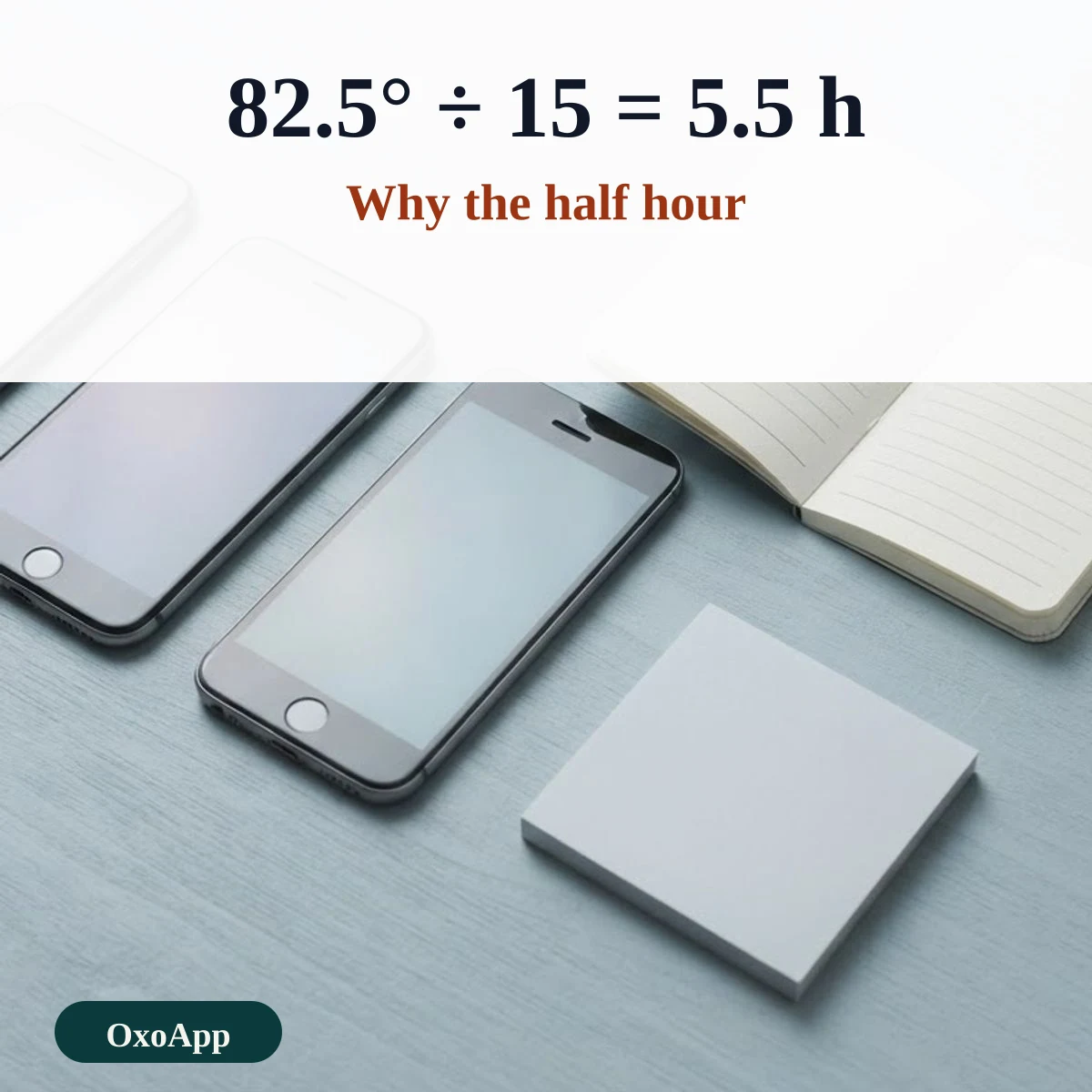
Why 82.5 degrees means 5.5 hours
The Earth turns 15 degrees of longitude each hour. A place at 82.5 degrees east sees the sun at its highest 82.5 ÷ 15 = 5.5 hours before Greenwich does. That is why India’s offset is not a whole number. Nepal chose UTC+5:45 for a similar reason and Sri Lanka uses UTC+5:30 as well. See also: time now. See also: time in the philippines.
India compared with other places
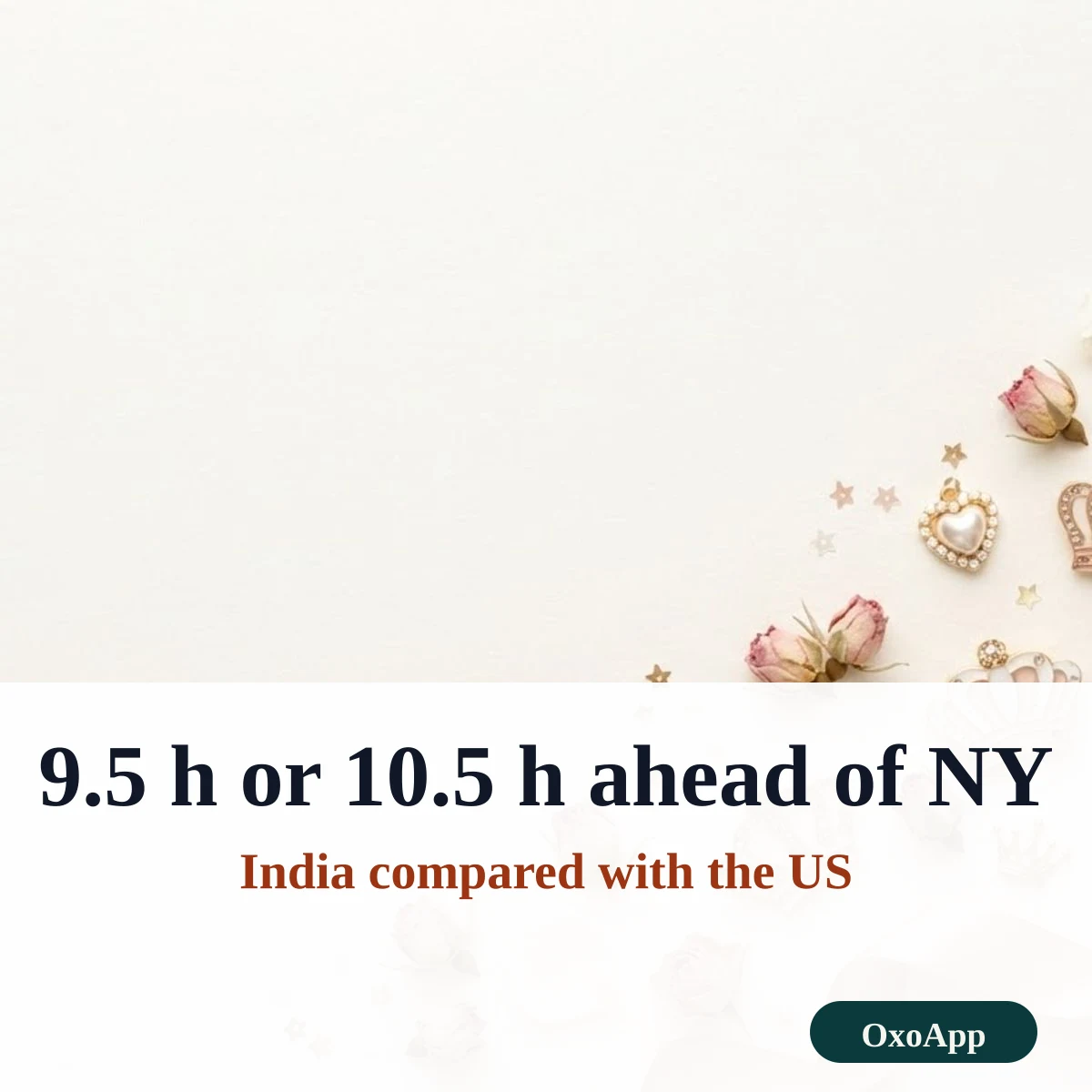
The gap to the US changes by an hour twice a year, because India does not change its clocks while the US does. The table shows the hours India is ahead on a winter and a summer date in 2026.
| Place | India is ahead in winter | India is ahead in summer |
|---|---|---|
| US Eastern | 10.5 h ahead | 9.5 h ahead |
| US Central | 11.5 h ahead | 10.5 h ahead |
| US Mountain | 12.5 h ahead | 11.5 h ahead |
| US Pacific | 13.5 h ahead | 12.5 h ahead |
| United Kingdom | 5.5 h ahead | 4.5 h ahead |
| Philippines | −2.5 h ahead | −2.5 h ahead |
| Japan | −3.5 h ahead | −3.5 h ahead |
Clock symbols to copy
Copy a clock face for each hour and half hour, plus watch, timer and hourglass symbols, and framed lines about time.
Clock face emoji and symbols
Framed time lines
Accuracy and limits
The clock follows your device clock and the rules in your browser. We have not yet tested every phone and browser. Report a problem to [email protected]. Back to OxoApp.
Frequently asked questions
What time zone is India in?
India uses Indian Standard Time, IST, which is UTC+5:30. It is the only official time in the country.
Why is India’s offset a half hour?
IST is based on the 82.5° east meridian. At 15 degrees of longitude per hour, 82.5 degrees is exactly 5.5 hours ahead of Greenwich. The meridian was chosen as India’s central one in 1905, and the standard took effect on January 1, 1906.
Does India use daylight saving time?
No. India does not observe it now. It was used during World War II, from 1942 to 1945.
What is the time difference between India and the US?
India is 9.5 hours ahead of US Eastern Time in summer (EDT) and 10.5 hours ahead in winter (EST). Use the table or the slider for other zones.
Updated