Square Root Symbol
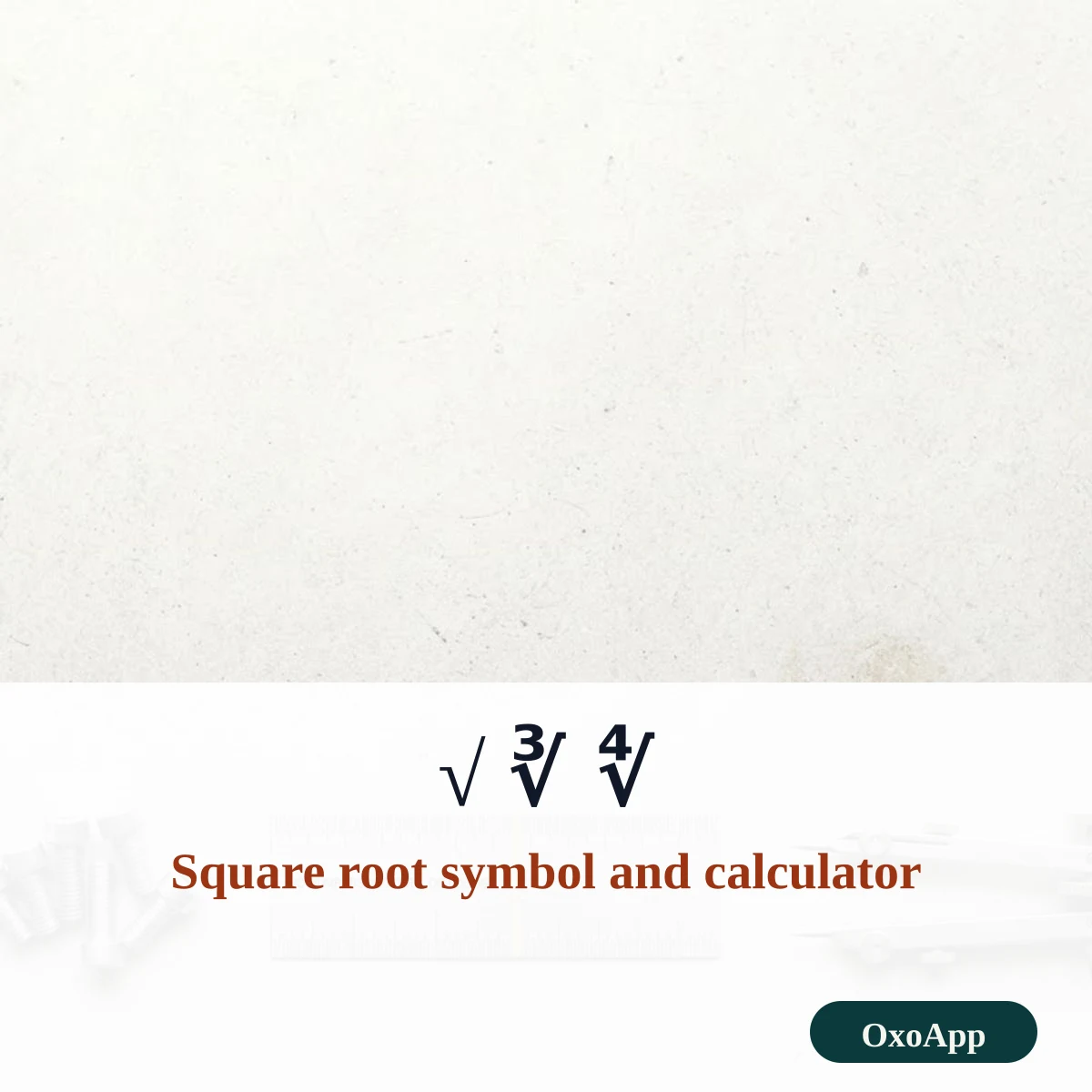
The square root symbol √ is U+221A, and its relatives are the cube root ∛ and the fourth root ∜. Copy any of them below, or type a number into the calculator to get its square root, cube root and fourth root, with a table of roots from 1 to 20.
Rounded to six decimal places. Roots of negative numbers are not real; the tool shows the answer with i.
Roots of 1 to 20
| n | √n | ∛n |
|---|---|---|
| 1 | 1 | 1 |
| 2 | 1.4142 | 1.2599 |
| 3 | 1.7321 | 1.4422 |
| 4 | 2 | 1.5874 |
| 5 | 2.2361 | 1.71 |
| 6 | 2.4495 | 1.8171 |
| 7 | 2.6458 | 1.9129 |
| 8 | 2.8284 | 2 |
| 9 | 3 | 2.0801 |
| 10 | 3.1623 | 2.1544 |
| 11 | 3.3166 | 2.224 |
| 12 | 3.4641 | 2.2894 |
| 13 | 3.6056 | 2.3513 |
| 14 | 3.7417 | 2.4101 |
| 15 | 3.873 | 2.4662 |
| 16 | 4 | 2.5198 |
| 17 | 4.1231 | 2.5713 |
| 18 | 4.2426 | 2.6207 |
| 19 | 4.3589 | 2.6684 |
| 20 | 4.4721 | 2.7144 |
Copy a root sign in three steps
- Tap √, ∛ or ∜ in the grid. The sign is copied and added to the selection box.
- Paste it where you need it, then type the number after it, such as √81.
- Use the calculator to check a value. It rounds to six decimal places, and the numbers in the table are rounded to four.
Root signs with codes and shortcuts
| Sign | Name | Code | HTML | Windows | Mac | LaTeX |
|---|---|---|---|---|---|---|
| √ | Square root | U+221A | √ |
Alt+251 | Option+V | \sqrt{{x}} |
| ∛ | Cube root | U+221B | ∛ |
– | – | \sqrt[3]{{x}} |
| ∜ | Fourth root | U+221C | ∜ |
– | – | \sqrt[4]{{x}} |
Square root in Excel, Word and LaTeX
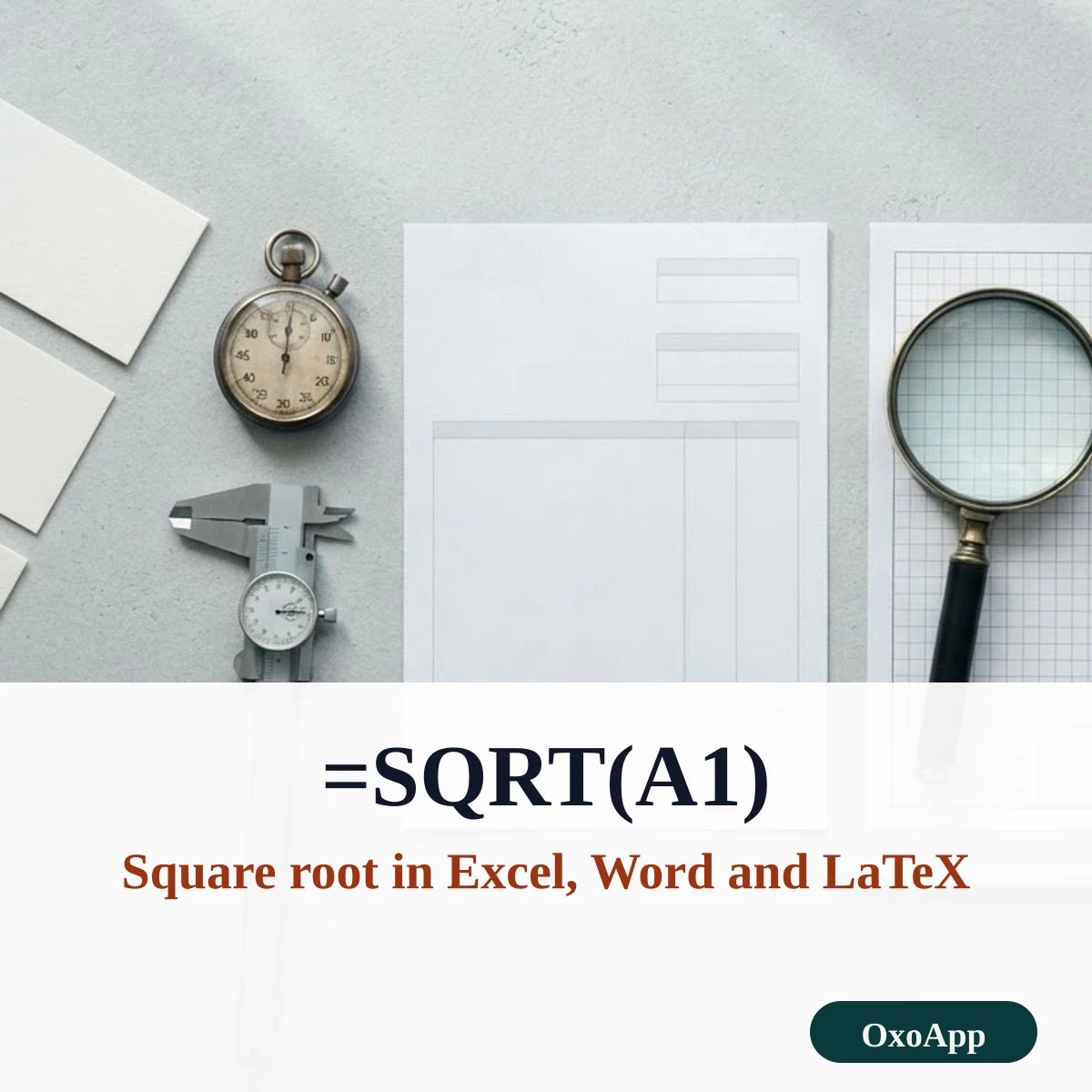
- Excel and Google Sheets: =SQRT(A1) gives the square root. For a cube root use =A1^(1/3).
- Word: type 221A and press Alt+X for the sign, or press Alt+=, type \sqrt and a space to build a radical with a bar over the number.
- LaTeX: \sqrt{x} for a square root and \sqrt[3]{x} for a cube root.
Root samples to copy
These ready-made lines use the root signs with common values. Tap one to copy it into a note, a message or a worksheet.
Perfect squares and cubes
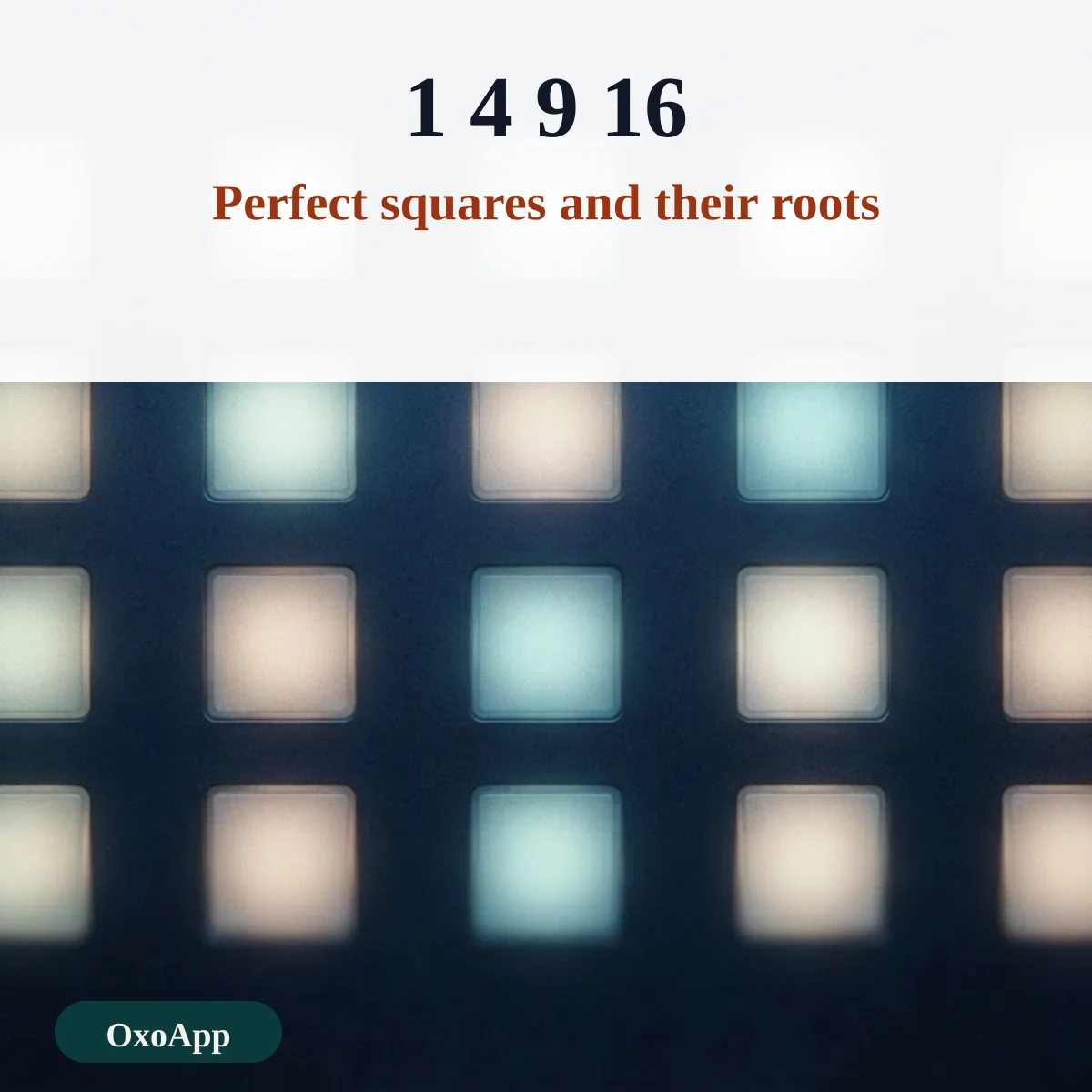
A perfect square has a whole-number root. Between 1 and 20 those are 1, 4, 9 and 16, which have square roots 1, 2, 3 and 4. The only perfect cubes in that range are 1 and 8, with cube roots 1 and 2. They are shown in bold in the table above. For every other number the root is irrational, which means its decimal never ends or repeats.
The radical sign and the bar
The √ sign is also called the radical sign. In printed math a horizontal bar runs over the number under the root, so that √(x + 1) is clear. Plain text cannot draw that bar, so write the number in brackets after the sign. The symbols page has more math signs on the symbols copy and paste page.
Device check
The signs are copied exactly as shown, and the calculator runs in your browser. We have not yet tested them on specific phones or systems. If a sign appears as a box, email [email protected] with the sign, device and system version.
Frequently asked questions
Is √ the same as a check mark ✓?
No. √ is the square root sign, U+221A, and ✓ is a check mark, U+2713. People often type √ as a tick because it is easier to find, but a screen reader will say square root, and a search for check mark will not find it.
How do I type √ on a keyboard?
On Windows, hold Alt and type 251 on the number pad. On a Mac, press Option+V. In Word, type 221A and press Alt+X.
What is the square root of 2 and of 3?
The square root of 2 is about 1.414214 and the square root of 3 is about 1.732051. Both are irrational, so their decimals never end or repeat.
How do I simplify a root like √50?
Look for a square factor. 50 is 25 × 2, so √50 = 5√2, which is about 7.071068. The calculator above shows the decimal form.
Back to OxoApp.
Updated